What is worth doing?

What is worth doing?
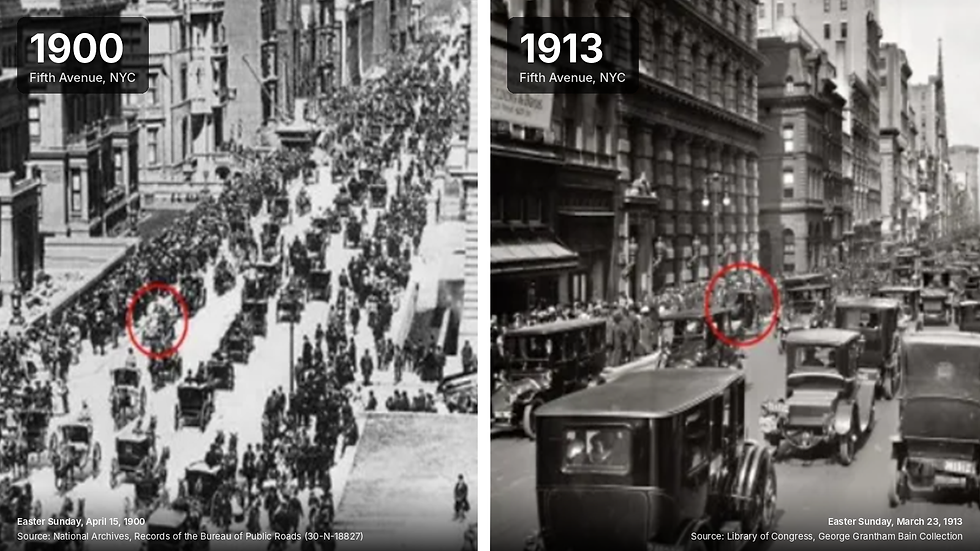
“Go to college, get a good job, have a good life.” That was the formula BUT increasingly, for many, the calculus has changed.
The old formula worked for a lot of people. It also gave generations a relatively clear answer to a harder question: What should I do with my life?
That answer is getting harder to take for granted and the details have a lot of nuance to them.
The U.S. high-school graduating class is projected to shrink 13% from its 2025 peak to 2041. Yet fewer students does not necessarily mean less competition. Students are concentrating on institutions they believe will expand their opportunities, while large public universities attract interest for their combination of affordability and access.
At work, a survey of nearly 14,000 people found that 58% would turn down a promotion requiring after-hours availability, even for MORE pay. Among U.S. respondents, the figure was 59%.
AI is opening entirely new paths.
LinkedIn Research shows rapid growth in AI-related roles, with millennials and Gen Z accounting for substantial shares of hiring in several of them. Other research found that trade-school graduates were 2X as likely to own a business as peers who attended traditional four-year colleges.
The signal is becoming clear. People are asking harder questions about the experiences they choose.
So what do you actually optimize for?
1/ Learn deliberately.
I value formal education because deliberate learning can change the trajectory of a life. It introduces ideas, disciplines, people and possibilities that may never otherwise have been available.
I learned that while studying for my University Degree and qualifying as a Chartered Accountant. At that time I also worked full-time as an articled clerk.
My teachers taught me discipline and the value of learning. Early mentors at work taught me how to prepare, listen, communicate clearly, exercise judgment and take responsibility for my work.
Education gave me possibilities. Work experience taught me what to do with them.
2/ Build through experience.
A degree is one experience. So is an apprenticeship, an articling role, a first job, learning a technology, managing a team or building something yourself.
Each teaches something different, expands capability and changes what becomes possible next.
This is WHY the debate about college is too narrow. The question is what the experience will give you: what you will learn, who you will meet, what you will become capable of doing and where it might take you.
The same applies to work. A promotion is more money, but also more responsibility and less time. A career is a salary, but also a set of experiences that shapes who you become.
3/ Decide what the optimization is for.
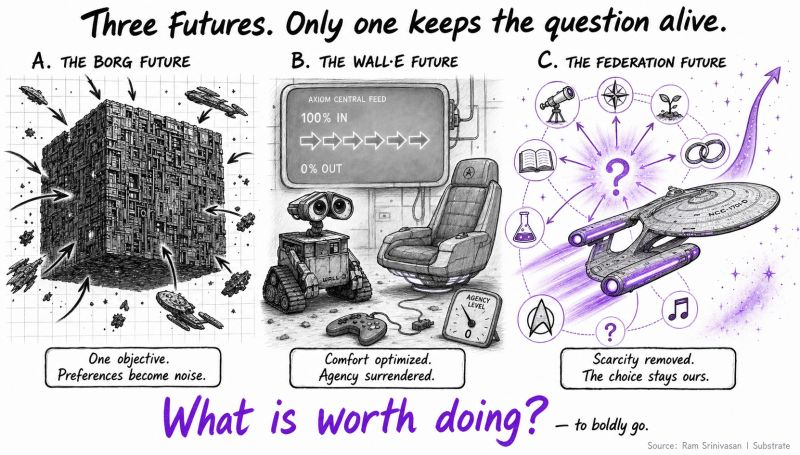
This is where AI changes the conversation.
An increasingly capable AI may eventually know more about us than we know about ourselves. It may predict what will make us healthier, wealthier, happier or more resilient. It may recommend the optimal path across almost any decision.
But knowing the optimal answer is NOT the same as choosing the objective.
A machine can optimize for wealth. It cannot decide whether wealth matters more to you than family.
It can optimize your career. It cannot tell you whether you want to build, teach, explore, serve or create.
Those are questions of judgment, values and choice.
For most of human history, we have spent enormous effort figuring out how to do things.
AI is becoming extraordinarily good at the how.
That creates an unusual opportunity: more capability, more information and potentially more freedom than any generation before us.
Freedom == Choice.
The paradox of choice is that as our options multiply, deciding what matters can become harder.
And therefore the question is: what is worth doing?
Perhaps THAT is the enduring value of education, in all its forms, formats and mediums. To give us the knowledge, experience and judgment to decide.
Until next time,
Ram
—
Ram Srinivasan
MIT Alum | Author, The Conscious Machine | Global Future of Work and AI Adoption Leader published in Business Insider, Fortune, Harvard Business Review, MIT Executive Viewpoints and more.
—
A Message From Ram:
My mission is to illuminate the path toward humanity's exponential future. If you're a leader, innovator, or changemaker passionate about leveraging breakthrough technologies to create unprecedented positive impact, you're in the right place. If you know others who share this vision, please share these insights. Together, we can accelerate the trajectory of human progress.
Disclaimer:
Ram Srinivasan currently serves as an Innovation Strategist and Transformation Leader, authoring groundbreaking works including "The Conscious Machine" and the upcoming "The Substrate Shift."
All views expressed on "Substrate" and across all digital channels and social media platforms are strictly personal opinions and do not represent the official positions of any organizations or entities I am affiliated with, past or present. The content shared is for informational and inspirational purposes only. These perspectives are my own and should not be construed as professional, legal, financial, technical, or strategic advice. Any decisions made based on this information are solely the responsibility of the reader.
While I strive to ensure accuracy and timeliness in all communications, the rapid pace of technological change means that some information may become outdated. I encourage readers to conduct their own due diligence and seek appropriate professional advice for their specific circumstances.