What happens when "intelligence" costs almost nothing?


DeepSeek V4 Flash is another indication that the economics of intelligence are changing.
For most of the past three years, progress in AI has been measured by capability. Each major release answered a familiar question: which model performs best? That made sense while the gap between frontier systems was large and access to the best models carried a meaningful premium.
A different trend has emerged over the last year. The cost of using advanced models has fallen FASTER than most expected. DeepSeek, Kimi and other "open-weights" models helped accelerate that shift by demonstrating that frontier-class models could be trained and served far more efficiently than prevailing assumptions suggested.
DeepSeekV4 Flash continues that trajectory.
It delivers performance that approaches the leading coding and reasoning models while reducing inference costs by an order of magnitude. Similar pricing pressure is now visible across Anthropic, OpenAI, Google, Meta, and other providers.
Capability continues to improve and the cost of accessing that capability continues to decline.
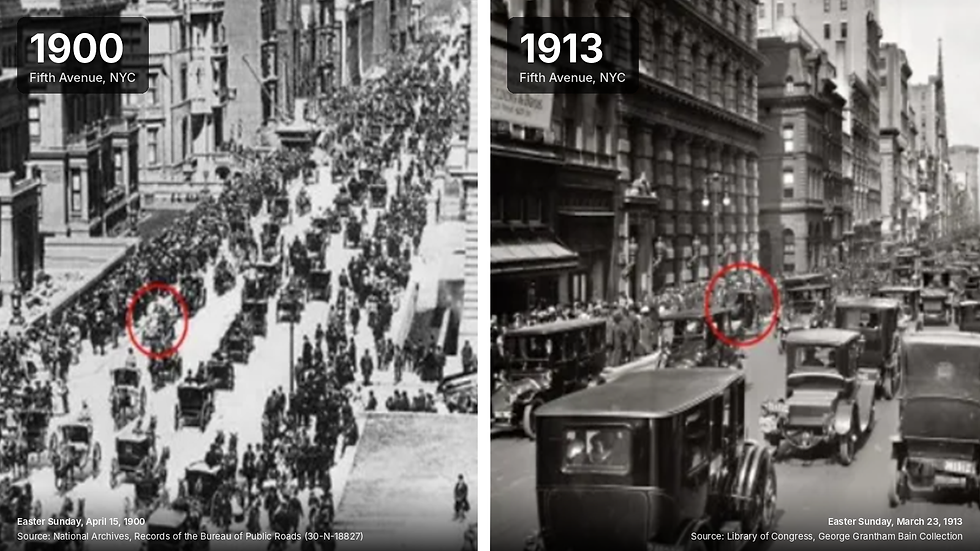
History suggests that this is the point when technologies become broadly transformative. Computing became more valuable as it became cheaper, storage became more valuable as it became cheaper, bandwidth became more valuable as it became cheaper.
The largest opportunities are usually created after a resource becomes inexpensive enough to stop thinking about conserving it.
Intelligence increasingly appears to fit that pattern.
Organizations have always rationed cognitive work because expert attention is expensive. Those constraints shaped the design of modern organizations long before AI existed.
Low-cost reasoning changes those assumptions.
When high-quality intelligence can be invoked thousands of times each day, analysis becomes continuous rather than occasional. Software can evaluate alternatives before presenting recommendations. Products can reason about user context throughout an interaction instead of at a few predefined moments. Individuals gain access to expertise that was previously too expensive to apply at scale.
The future of work therefore extends beyond productivity gains. Organizations MUST begin redesigning processes around the assumption that reasoning is abundant.
DeepSeek V4 Flash provides another indication that intelligence is becoming abundant. The long-term significance is unlikely to be found in today's benchmark rankings or pricing tables. It will be found in the new ways people organize work once high-quality reasoning becomes an inexpensive input to almost every task.
Until next time,
Ram
—
Ram Srinivasan
MIT Alum | Author, The Conscious Machine | Global Future of Work and AI Adoption Leader published in Business Insider, Fortune, Harvard Business Review, MIT Executive Viewpoints and more.
—
A Message From Ram:
My mission is to illuminate the path toward humanity's exponential future. If you're a leader, innovator, or changemaker passionate about leveraging breakthrough technologies to create unprecedented positive impact, you're in the right place. If you know others who share this vision, please share these insights. Together, we can accelerate the trajectory of human progress.
Disclaimer:
Ram Srinivasan currently serves as an Innovation Strategist and Transformation Leader, authoring groundbreaking works including "The Conscious Machine" and the upcoming "The Substrate Shift."
All views expressed on "Substrate" and across all digital channels and social media platforms are strictly personal opinions and do not represent the official positions of any organizations or entities I am affiliated with, past or present. The content shared is for informational and inspirational purposes only. These perspectives are my own and should not be construed as professional, legal, financial, technical, or strategic advice. Any decisions made based on this information are solely the responsibility of the reader.
While I strive to ensure accuracy and timeliness in all communications, the rapid pace of technological change means that some information may become outdated. I encourage readers to conduct their own due diligence and seek appropriate professional advice for their specific circumstances.