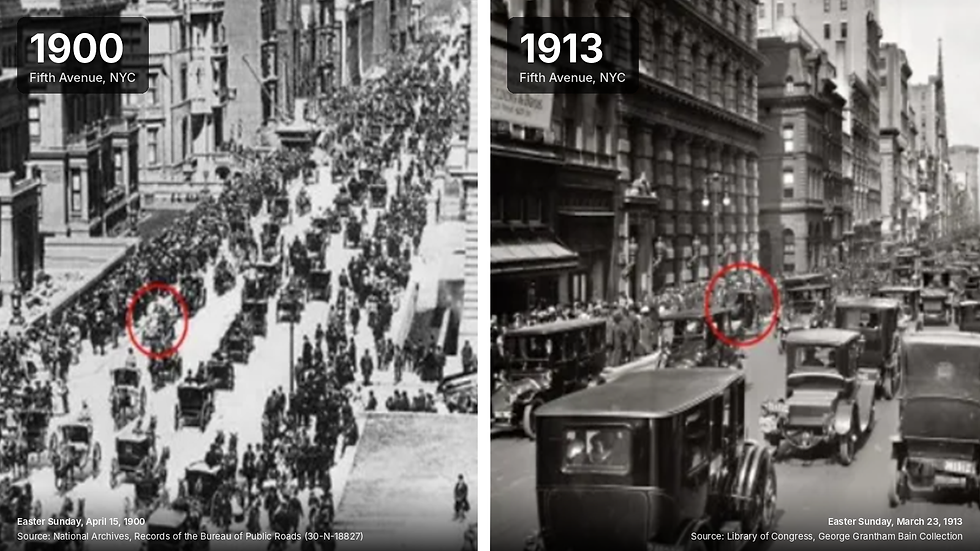
OpenAI’s ChatGPT Ads business has reportedly reached a $1 billion revenue in less than 200 days.

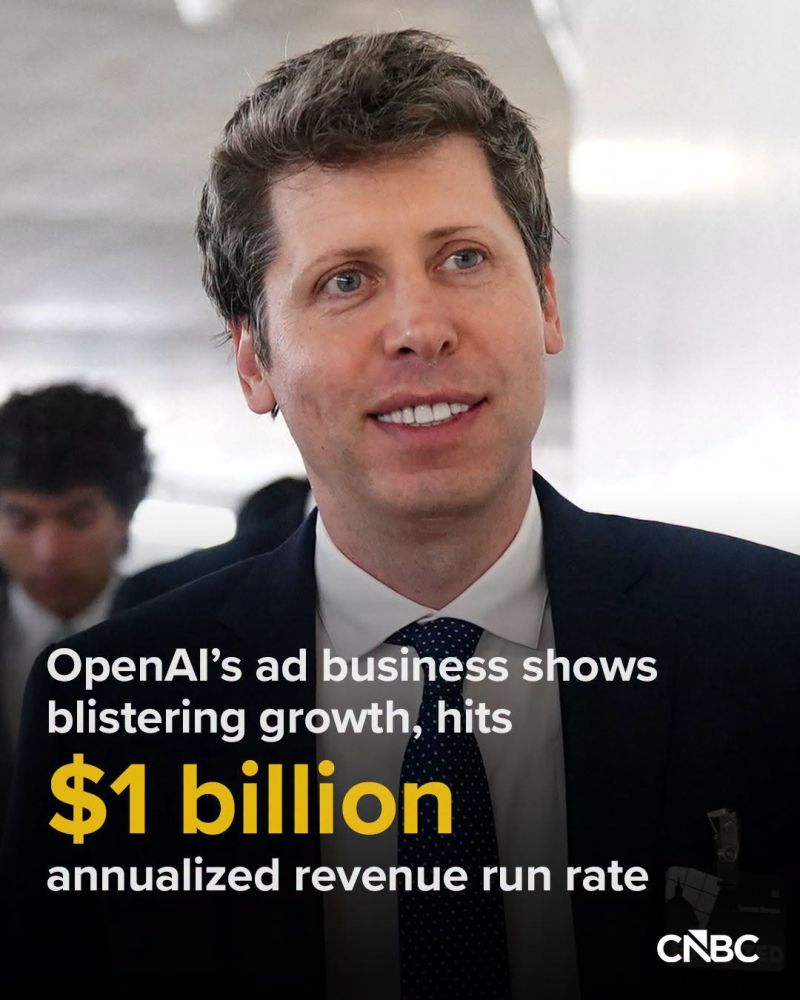
OpenAI’s ChatGPT Ads business has reportedly reached a $1 billion annualized revenue run rate in fewer than 200 days. $1B run rate ≠ $1B earned. It means the current pace of advertising revenue, if sustained for a full year, would equal roughly $1 billion.
Still, the speed is extraordinary.
Earlier in 2026, ChatGPT Ads was reportedly at roughly $100 million annually. OpenAI now says tens of thousands of advertisers use the platform, which is available in more than 40 countries, with self-service purchasing expanding across India, Europe, the Middle East, and North Africa.
A few implications stand out.
1\ Advertiser demand is real.
Despite criticism from Anthropic, the rapid monetization suggests advertisers see value in reaching people while they are actively researching, comparing, and making decisions.
2\ This could become a full advertising platform.
The bigger opportunity extends beyond sponsored placements to self-service campaigns, attribution, bidding, conversion optimization, product feeds, brand safety, and agency integrations.
3\ The IPO narrative is changing.
OpenAI is increasingly positioning itself as a multi-sided platform spanning consumer subscriptions, enterprise products, API usage, and advertising.
But the bigger implication may be for the future of work.
Knowledge work has traditionally been fragmented: search for information, visit multiple sites, compare options, build a shortlist, make a recommendation, contact vendors, and eventually decide.
Conversational AI can compress that workflow.
A professional might ask an AI assistant to map a market, identify suppliers, compare products, summarize research, draft an RFP, build a business case, and eventually initiate the purchase.
ChatGPT is therefore evolving from a place where people find answers into a place where they may increasingly do work and make decisions.
That creates a new commercial interface.
Search advertising monetized keywords. Social advertising monetized attention and audiences. Conversational advertising may monetize high-intent, context-rich problem-solving.
Of course, the key issue will be TRUST.
OpenAI says ads are clearly labeled, do not influence answers, and do not give advertisers access to private conversations. Those safeguards will be essential.
Because the bigger question is whether the AI we rely on to make decisions will also become a powerful channel for influencing those decisions.
If ChatGPT becomes the place where people research, evaluate, recommend, purchase, and execute, advertising is no longer just about monetizing attention.
It is about monetizing influence at the moment of decision.
That may be one of the most consequential models to emerge from AI.
Until next time,
Ram
—
Ram Srinivasan
MIT Alum | Author, The Conscious Machine | Global Future of Work and AI Adoption Leader published in Business Insider, Fortune, Harvard Business Review, MIT Executive Viewpoints and more.
—
A Message From Ram:
My mission is to illuminate the path toward humanity's exponential future. If you're a leader, innovator, or changemaker passionate about leveraging breakthrough technologies to create unprecedented positive impact, you're in the right place. If you know others who share this vision, please share these insights. Together, we can accelerate the trajectory of human progress.
Disclaimer:
Ram Srinivasan currently serves as an Innovation Strategist and Transformation Leader, authoring groundbreaking works including "The Conscious Machine" and the upcoming "The Substrate Shift."
All views expressed on "Substrate" and across all digital channels and social media platforms are strictly personal opinions and do not represent the official positions of any organizations or entities I am affiliated with, past or present. The content shared is for informational and inspirational purposes only. These perspectives are my own and should not be construed as professional, legal, financial, technical, or strategic advice. Any decisions made based on this information are solely the responsibility of the reader.
While I strive to ensure accuracy and timeliness in all communications, the rapid pace of technological change means that some information may become outdated. I encourage readers to conduct their own due diligence and seek appropriate professional advice for their specific circumstances.