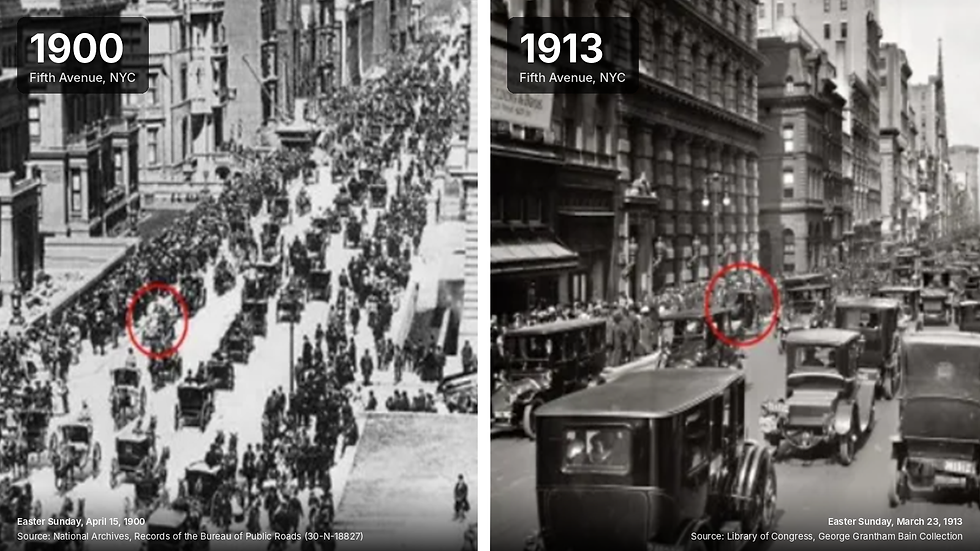
Amazon is consolidating its AI portfolio and focusing on fewer, more capable foundation models.


Amazon is consolidating its AI portfolio and focusing on fewer, more capable foundation models.
Recent reporting suggests Amazon is deprecating much of its Nova portfolio, including Nova Premier, Nova Omni, Reel, and Canvas, and redirecting talent and GPU budget toward a new frontier model effort.
A new Amazon flagship is expected at re:Invent later this year.
In parallel, AWS is pruning overlapping AI services and pointing customers toward a smaller set of anchors such as Amazon Bedrock, Bedrock AgentCore, and Quick / Quick Suite.
None of this signals retreat from AI. In fact quite the opposite. It reflects a company still committing tens of billions to AI infrastructure, custom silicon (Trainium, Inferentia), Nova research, Amazon Q, Alexa AI, and partnerships including Anthropic’s Claude models through Bedrock.
The strategy is about focus: fewer foundational systems, more disciplined platforms, and closer alignment with customer workloads.
This pattern now spans the industry. OpenAI, Google, Anthropic, and Meta have all retired or folded earlier models and services into new architectures as capabilities improve, costs shift, and engineering effort concentrates on a smaller number of frontier systems.
OpenAI’s work on Sora is one illustration. A text‑to‑video frontier model that could generate detailed scenes from natural language is now being phased out as a standalone product and API. Google is following a similar arc with Veo and Gemini Omni, consolidating video generation and editing into the Gemini ecosystem.
What can look like “product churn” from the outside is often portfolio rationalization: a move from a sprawling collection of models and point services to a clearer platform with a handful of durable primitives.
For enterprises, the implication is straightforward: do not treat any single model or provider as fixed infrastructure. Design applications so the underlying model can be swapped when needed.
That flexibility allows teams to adopt new models without rewriting entire applications, maintain leverage rather than drifting into deep vendor lock‑in, manage cost and latency by selecting different models for different workloads, and reduce disruption when providers retire or consolidate services.
In practice, starting with one provider is often sensible. It speeds up learning, governance, and security integration. The important choice is not which model to standardize on indefinitely, but whether the architecture assumes that the stack will evolve.
Your first model will not be your last. Your first agent framework will not be your final architecture. Your first cloud AI portfolio will be rationalized over time.
The real question for leaders is what becomes possible when we architect for continuous evolution instead of a single point in time.
Once you begin to answer that, you move beyond simply "adopting AI" and start "designing an adaptive system" that can absorb whatever the next generation of models makes possible.
Until next time,
Ram
—
Ram Srinivasan
MIT Alum | Author, The Conscious Machine | Global Future of Work and AI Adoption Leader published in Business Insider, Fortune, Harvard Business Review, MIT Executive Viewpoints and more.
—
A Message From Ram:
My mission is to illuminate the path toward humanity's exponential future. If you're a leader, innovator, or changemaker passionate about leveraging breakthrough technologies to create unprecedented positive impact, you're in the right place. If you know others who share this vision, please share these insights. Together, we can accelerate the trajectory of human progress.
Disclaimer:
Ram Srinivasan currently serves as an Innovation Strategist and Transformation Leader, authoring groundbreaking works including "The Conscious Machine" and the upcoming "The Substrate Shift."
All views expressed on "Substrate" and across all digital channels and social media platforms are strictly personal opinions and do not represent the official positions of any organizations or entities I am affiliated with, past or present. The content shared is for informational and inspirational purposes only. These perspectives are my own and should not be construed as professional, legal, financial, technical, or strategic advice. Any decisions made based on this information are solely the responsibility of the reader.
While I strive to ensure accuracy and timeliness in all communications, the rapid pace of technological change means that some information may become outdated. I encourage readers to conduct their own due diligence and seek appropriate professional advice for their specific circumstances.