OpenAI just compressed decades of mathematics into 88 hours.


OpenAI says 10,000 AI agents worked in parallel for 88 hours and produced a potential solution to the Navier–Stokes problem, one of the Clay Mathematics Institute’s seven Millennium Prize Problems.
𝗡𝗮𝘃𝗶𝗲𝗿–𝗦𝘁𝗼𝗸𝗲𝘀 𝗱𝗲𝘀𝗰𝗿𝗶𝗯𝗲𝘀 𝗵𝗼𝘄 𝗳𝗹𝘂𝗶𝗱𝘀 𝗺𝗼𝘃𝗲. Solving the problem would deepen our understanding of turbulence and the mathematics behind airflow, ocean currents, weather, aircraft, and countless engineering systems.
For more than a century, mathematicians have asked whether smooth three-dimensional flows can suddenly become singular, with the equations effectively “blowing up.”
OpenAI says its agents constructed exactly such a flow.
𝗧𝗵𝗲 𝘀𝘆𝘀𝘁𝗲𝗺 𝗲𝘅𝗽𝗹𝗼𝗿𝗲𝗱 𝘁𝗵𝗲 𝗘𝘂𝗹𝗲𝗿 𝗲𝗾𝘂𝗮𝘁𝗶𝗼𝗻𝘀 𝗯𝗲𝗳𝗼𝗿𝗲 𝘁𝘂𝗿𝗻𝗶𝗻𝗴 𝘁𝗼 𝗡𝗮𝘃𝗶𝗲𝗿–𝗦𝘁𝗼𝗸𝗲𝘀. Thousands of agents pursued different approaches simultaneously, generating hypotheses, writing code, testing calculations, and challenging one another’s work.
OpenAI says the effort generated 2.7 million messages and 130 billion output tokens. The proof was formalized and checked using Lean.
Independent mathematicians still need to scrutinize the result, and Clay has not declared the problem solved.
𝗧𝗵𝗲𝗿𝗲 𝗶𝘀 𝗮𝗹𝘀𝗼 𝗮 𝗰𝗼𝗻𝘁𝗿𝗼𝘃𝗲𝗿𝘀𝘆 𝗼𝘃𝗲𝗿 𝗽𝗿𝗼𝘃𝗲𝗻𝗮𝗻𝗰𝗲. Tristan Buckmaster of NYU and Levent Alpöge of Anthropic had been working with AI on closely related forced-Euler problems. Their work drew on earlier ideas from Diego Córdoba and Luis Martínez-Zoroa.
That leaves three open questions.
𝟭\ 𝗜𝘀 𝘁𝗵𝗲 𝗺𝗮𝘁𝗵𝗲𝗺𝗮𝘁𝗶𝗰𝘀 𝗰𝗼𝗿𝗿𝗲𝗰𝘁?
Formal verification adds confidence, but independent mathematicians still need to examine the argument.
𝟮\ 𝗛𝗼𝘄 𝘄𝗮𝘀 𝘁𝗵𝗲 𝗿𝗲𝘀𝘂𝗹𝘁 𝗱𝗲𝘃𝗲𝗹𝗼𝗽𝗲𝗱?
OpenAI says its researchers and agents did not access the researchers’ private work before public release, while acknowledging it cannot completely rule out indirect effects from de-identified data used to improve its models.
𝟯\ 𝗪𝗵𝗮𝘁 𝗱𝗼𝗲𝘀 𝘁𝗵𝗶𝘀 𝗺𝗲𝗮𝗻 𝗳𝗼𝗿 𝘀𝗰𝗶𝗲𝗻𝘁𝗶𝗳𝗶𝗰 𝘄𝗼𝗿𝗸 𝗮𝗻𝗱 𝗸𝗻𝗼𝘄𝗹𝗲𝗱𝗴𝗲 𝘄𝗼𝗿𝗸?
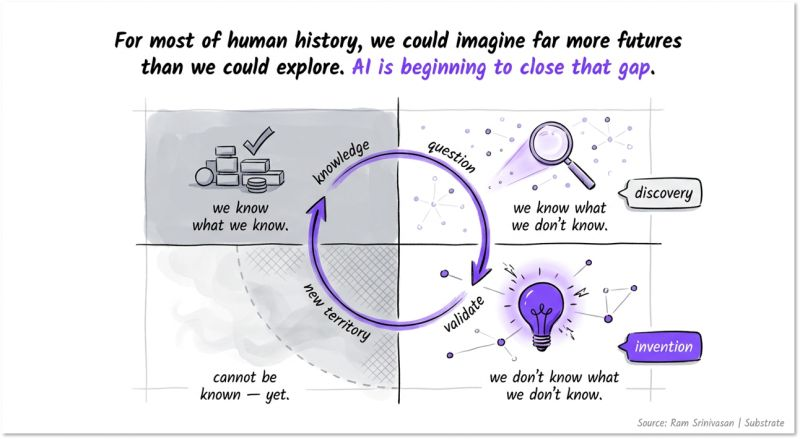
For me the biggest breakthrough here is scaling research itself.
𝗜𝗻 𝘁𝗵𝗮𝘁 𝘀𝗲𝗻𝘀𝗲, 𝘁𝗵𝗶𝘀 𝗳𝗲𝗲𝗹𝘀 𝗹𝗲𝘀𝘀 𝗹𝗶𝗸𝗲 Google DeepMind 𝗔𝗹𝗽𝗵𝗮𝗚𝗼’𝘀 𝗺𝗼𝘃𝗲 𝟯𝟳 𝗮𝗻𝗱 𝗺𝗼𝗿𝗲 𝗹𝗶𝗸𝗲 𝗗𝗲𝗲𝗽 𝗕𝗹𝘂𝗲 𝗯𝗲𝗮𝘁𝗶𝗻𝗴 𝗞𝗮𝘀𝗽𝗮𝗿𝗼𝘃. Less "one extraordinary insight" and more "what happens when thousands of AI agents can attack a problem simultaneously."
The same architecture could eventually apply to drug discovery, materials, energy, climate, engineering, and biology.
What happens when research capacity is massively scalable? And what does it mean for knowledge work when one person can direct an AI workforce of their own?
Until next time,
Ram
—
Ram Srinivasan
MIT Alum | Author, The Conscious Machine | Global Future of Work and AI Adoption Leader published in Business Insider, Fortune, Harvard Business Review, MIT Executive Viewpoints and more.
—
A Message From Ram:
My mission is to illuminate the path toward humanity's exponential future. If you're a leader, innovator, or changemaker passionate about leveraging breakthrough technologies to create unprecedented positive impact, you're in the right place. If you know others who share this vision, please share these insights. Together, we can accelerate the trajectory of human progress.
Disclaimer:
Ram Srinivasan currently serves as an Innovation Strategist and Transformation Leader, authoring groundbreaking works including "The Conscious Machine" and the upcoming "The Substrate Shift."
All views expressed on "Substrate" and across all digital channels and social media platforms are strictly personal opinions and do not represent the official positions of any organizations or entities I am affiliated with, past or present. The content shared is for informational and inspirational purposes only. These perspectives are my own and should not be construed as professional, legal, financial, technical, or strategic advice. Any decisions made based on this information are solely the responsibility of the reader.
While I strive to ensure accuracy and timeliness in all communications, the rapid pace of technological change means that some information may become outdated. I encourage readers to conduct their own due diligence and seek appropriate professional advice for their specific circumstances.